Vinyl vs. Laminate Flooring: Pros, Cons & Best Uses
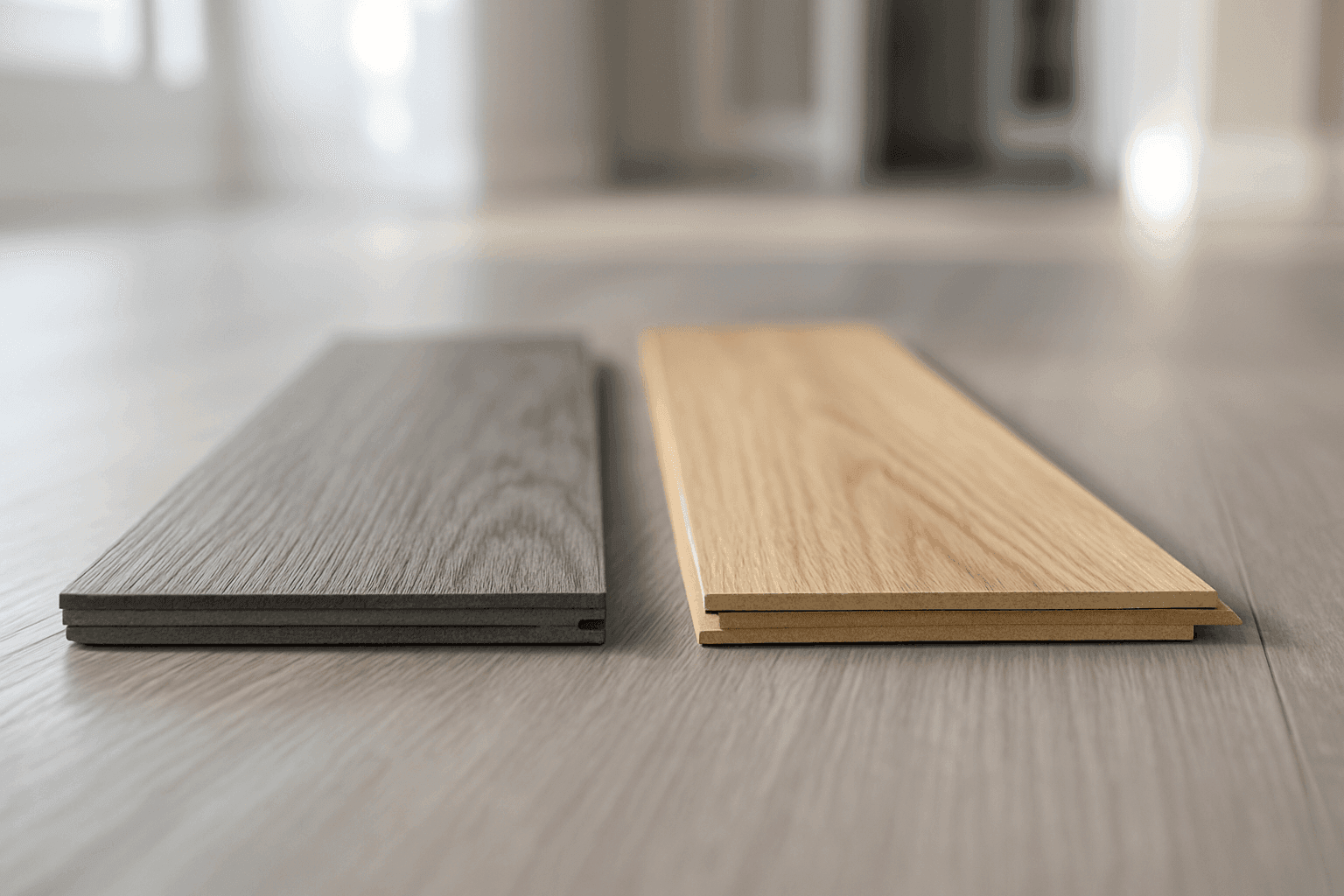
Introduction – Why Homeowners and Businesses Compare Vinyl and Laminate
Choosing new flooring can feel like picking the right shoes for a long journey. It needs to look good, last, and keep up with your everyday life. For many homeowners—and businesses, too—vinyl and laminate flooring are the go-to options.
Both types have grown in popularity, promising durability, style, and value. But they’re not created equal. Understanding their differences can save you from costly mistakes or constant repairs. At SunCoast Flooring Solutions, we help clients every day who are weighing these choices. Let’s break down what you really need to know.
Vinyl Flooring Overview – Construction, Pros, Cons, Best Applications
Imagine vinyl flooring as a sturdy raincoat for your floors: flexible, waterproof, and able to handle almost anything you throw at it.
Construction
Vinyl flooring is made from synthetic materials—primarily PVC—layered for strength. Modern luxury vinyl plank (LVP) and luxury vinyl tile (LVT) mimic the look of wood or stone with surprising realism.
Pros
- Waterproof: Can handle spills, wet shoes, and even standing water.
- Durable: Withstands high-traffic, busy households, and messy pets.
- Soft Underfoot: Feels warmer and more forgiving than tile.
- Low Maintenance: Easy to sweep, mop, and keep looking fresh.
- Design Variety: Wide range of colors, textures, and patterns.
- Good for Indoor Air Quality: Many brands are FloorScore or GREENGUARD certified.
Cons
- Can Dent or Scratch: Heavy furniture or sharp objects may leave marks.
- Fades in Sunlight: Prolonged exposure can discolor some types.
- Feels Less “Natural”: Some people prefer the feel or sound of real wood.
- Not Easily Refinished: Damaged planks usually need replacing, not sanding.
Best Applications
- Kitchens and bathrooms: Unfazed by splashes or spills.
- Basements: Moisture resistance is key.
- Commercial spaces: Handles foot traffic and easy cleaning.
Laminate Flooring Overview – Construction, Pros, Cons, Best Applications
Think of laminate as a strong, stylish jacket: more rigid than vinyl, with a beautiful finish, but a little more sensitive to the elements.
Construction
Laminate flooring features a core of high-density fiberboard (HDF), topped with a high-resolution photographic layer that mimics wood, tile, or even concrete. A wear layer protects the surface.
Pros
- Realistic Appearance: Advances in printing technology create convincing wood or stone looks.
- Scratch Resistance: Tough wear layer stands up to pets and shoes.
- Cost-Effective: Generally less expensive than hardwood, similar to mid-grade vinyl.
- Easy to Clean: Regular sweeping and damp mopping is all it takes.
- Quick Installation: Click-lock planks make installation fast.
Cons
- Not Waterproof: Prolonged moisture can cause swelling or warping.
- Sound: Can be noisier underfoot unless paired with soundproofing.
- Repair Challenges: Damaged boards may require partial replacement.
- Less Comfortable: Feels harder and cooler than vinyl or real wood.
Best Applications
- Living rooms and bedrooms: Perfect for low-moisture, high-style areas.
- Offices and retail spaces: Attractive and durable for moderate traffic.
- Dining rooms: With proper care, holds up to everyday use.
Side-by-Side Comparison – Durability, Moisture Resistance, Cost, Maintenance
How do vinyl and laminate stack up? Let’s pit them head-to-head:
- Durability: Both are tough, but vinyl edges ahead in moisture-prone or high-traffic areas.
- Moisture Resistance: Vinyl is fully waterproof; laminate is water-resistant at best.
- Cost: Laminate is often less expensive up front. Premium vinyl (LVP/LVT) can equal or surpass it.
- Maintenance: Both are easy-care. Vinyl shrugs off spills; laminate needs quick attention to moisture.
- Pet-Friendliness: Vinyl wins for scratch and spill resistance.
- Sound & Comfort: Vinyl is quieter and softer. Laminate can be noisy unless using an underlayment.
- Aesthetics: Both offer realistic visuals. Laminate sometimes has a more convincing wood texture.
- Installation: Both offer DIY-friendly click-lock systems. Vinyl sheet options may require pro installation.
- Sustainability & Air Quality: Look for FloorScore, GREENGUARD, or similar certifications. Some vinyls are fully recyclable; many laminates use recycled content.
Which Is Right for Your Room? – Room-by-Room Recommendations 🏠
Let’s walk through some common spaces:
Kitchens & Bathrooms
- Vinyl: Best choice. Handles water, dropped pans, and splashes.
- Laminate: Use only in low-moisture kitchens. Avoid for bathrooms.
Basements
- Vinyl: Excellent for below-grade spaces where dampness is a concern.
- Laminate: Risk of swelling or mold if moisture is present.
Offices & Commercial Spaces
- Laminate: Stylish and cost-effective for offices with moderate use.
- Vinyl: Ideal for entryways, clinics, salons, or anywhere spills happen.
Bedrooms & Living Rooms
- Laminate: Warm, inviting, budget-friendly.
- Vinyl: Great for playrooms or spaces with pets or allergies.
Garages & Mudrooms
- Vinyl: Tough, waterproof, and stain-resistant.
- Laminate: Not recommended.
Tips for Special Needs
- Allergies: Both are hypoallergenic with regular cleaning.
- Floor Heating: Many vinyl and laminate products work with radiant systems—always check manufacturer specs.
- Eco-Friendly: Cork or bamboo flooring (from SunCoast Flooring Solutions) are sustainable alternatives.
Professional Consultation – When to Ask an Expert
Some flooring choices are straightforward. Others—especially in tricky spaces—call for a professional’s experience. A floor that looks great in the showroom can fail in a real room if you don’t consider subfloor flatness, moisture levels, or sound requirements.
A flooring consultation with SunCoast Flooring Solutions can help you:
- Assess moisture and humidity risks
- Evaluate subfloor readiness and leveling needs
- Choose the right underlayment for comfort, quiet, and insulation
- Navigate codes and safety guidelines (such as ASTM F710 for concrete subfloors)
- Select products certified for low VOC emissions (improving indoor air quality)
Trustbuilding – Notes on Safety, Warranties, and Reputable Installation
- Safety: Always ask for product safety data, especially for indoor air quality. Look for certifications like FloorScore or GREENGUARD.
- Warranties: Most major brands offer residential and commercial warranties. Follow maintenance guidelines to keep your coverage valid.
- Installation: Professional installation ensures seams, transitions, and moisture barriers are done right. This protects your investment and your health.
Performance in High-Traffic Areas
Vinyl flooring shines in busy homes, restaurants, and retail spaces. It shrugs off muddy boots and rolling carts. Laminate does well, too, but needs a little more care—think of it as sturdy, but not invincible.
Pet-Friendliness
Both floors handle claws and fur. Vinyl, being waterproof, is the safer bet for those “oops” pet moments. Quick cleanup and tough surfaces keep everyone happy.
Cleaning & Maintenance
Sweeping and damp mopping are your best friends. Avoid harsh chemicals. For grout lines in vinyl tile, regular cleaning and sealing help maintain appearance.
Aesthetics & Installation Differences
Laminate sometimes wins the “looks most like wood” contest, but vinyl is closing the gap fast. Installation for both is DIY-friendly, but larger jobs or complex layouts benefit from a professional crew—especially when cuts, transitions, or moisture barriers are involved.
Sustainability & Indoor Air Quality
Flooring products continue to improve. Many brands offer low-VOC options and are certified by independent organizations. Ask about recycled content or products made with renewable materials like bamboo or cork.
Conclusion: Confident Flooring Choices Start with the Right Information
There’s no “one-size-fits-all” answer in the vinyl vs. laminate debate. The best flooring for your space depends on moisture, traffic, style, and budget. For kitchens and basements, vinyl flooring near you is tough to beat. For quiet bedrooms or stylish offices, laminate shines.
When in doubt—especially if your space sees heavy use, pets, or moisture—bring in a professional. SunCoast Flooring Solutions is ready to help you pick the perfect floor, install it right, and keep it looking beautiful for years to come.
Call SunCoast Flooring Solutions now — or reach us anytime at 877-796-9197 .